Image of the day – 7th October 2009
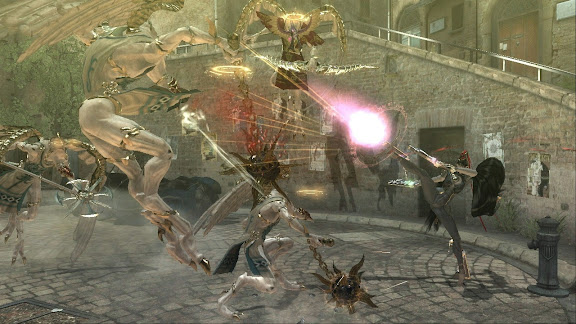
Parp!
(Actually, this one is a little better!)
Parp!
(Actually, this one is a little better!)
Looks like my post from yesterday ended a little prematurely!
It looks like that same guy from the previous linked articles (here and here) is still running his mouth off crying about how PSPgo is bad for him and implying it is therefore bad for everybody.
I like how he implies that retailer-created hardware bundles are a real benefit to the consumer (when did you ever see these in-store bundles and NOT see them include some trash titles and/or some store-branded products forced onto you? When’s the last time you were able to buy a console ‘vanilla’ without any extras determined by the store?) and the inability for him to create such ‘beneficial’ bundles means he can’t discount the product. You can always discount the product. Don’t tell me you’re not making any margin on it Mr. Retailer.
You’re no victim, so stop acting like one.
 My first job was in an independent software retailer. This was back in the 8 and 16 bit days. I recall the mad rush for Xenon 2 on the day it came out. Yup, ancient history. I’m declaring this now to demonstrate that I’m perfectly able to empathise with retailers and am not adamantly standing on one side of an argument refusing to see another’s perspective.
I read with some interest the latest tantrum declared last week about FIFA ’10‘s pricing in supermarkets being roughly 50% off retail price at launch. Independent retailers were quick to vent their spleens about this ‘unfair’ practice and added some melodramatic phrases such as ‘bully-boy tactics’ to spice things up.
Sure, supermarkets can exploit the loss-leader sales approach better than indies because they’ve more capital to work with and more varied stock to recoup those losses. Supermarkets are not competing with game retailers directly (once they do, you’ll be fucked and you’ll have even more to cry about). They’re going for the impulse purchase. Most of their customers are not visiting their store with the intent of buying games. Odds are they’re doing a grocery shop or are shopping for something that supermarkets devote 98% of their floor space to – not videogames. Whilst those customers are pushing that trolley around they may be tempted to grab a game too. They’re already in the store, that crucial battle has already been won. Now the supermarkets are there to eke out a little more revenue from the customer and also (and more significantly) bump up the importance of their market share in this area of trade.
So, indies, it’s not an attack on you specficially. It’s just capitalism and market forces. You know – the same stuff you exploit to turn a profit too. Supermarkets also tend to take a far stronger stand on 18-rated products such as videogames (to the point of refusing to stock them – hello Walmart) than indies. I’d like to see a survey of where adult games are purchased by minors and see the split between indies and supermarkets on that one. Maybe we should get a law in place to control some of that shit. Oh, wait. We already have. Still, there’s what’s legal and then there’s what’s profitable, right? Right.
Funnily enough, a little over a year ago there were reports of independent retailers (including the one quoted in that first article) merrily buying lots of their stock from off the shelves of the same supermarkets they now wish to regulate. Like with FIFA ’10, this was thanks to a supermarket price-war on high-profile games. The indies swooped in, bought as much stock as they could at cheaper prices than their own distributors were offering and then took that stock to their own store, marked up the price and put it onto their own shelves. Apparently, indies were favouring this practice by claiming they were ‘offering choice’ to the consumer. How much choice are you offering when you buy up all the cheap stock from one place to sell it at a higher price at another? It’s a questionable practice and an even more questionable motive than the one mentioned by the indies. Perhaps there should be a law against that too?
Seems to me that indies are more than happy for supermarkets to offer low prices when those indies can profit by them (with no consideration given to the consumer). But if they can’t profit then they go on a rampage and demand laws and regulations? How convenient.
These indies have had it good for a few years. They’ve exploited the market and, almost entirely through the sales of second hand games, stemmed the cash-flow so that less and less of it goes back up the chain to the people who actually make (and truly ‘own’) the games. Buying a box and paying for it once whilst selling it high, buying it low, reselling it high and buying it low again and again and again may sound like you’re doing punters a favour – but you’re fucking over the people that create the products that you sell. You’ve had it your way, but the industry knows full well what you’re up to in spite of your smirking pleas that you’re simply thinking of how best to serve the consumer.
Which is why the industry will devote more and more of its resources to eliminating the need for the retailer. The production costs and risks are too high to have a greedy, two-faced middle-man fiddle a way to exploit the process and prevent revenue from reaching all parties.
To some extent iTunes has laid the foundation for this. Digital distribution. Selling content without retailers. Yes, games are different from music but the methodology is what’s important here.
Publishers flock to services like Steam and GameTap and other digital distribution services. Digital Distribution means you don’t need to worry about the costs in manufacturing and distributing physical product. You can sell your product more cheaply as a result – making it more attractive to the consumer without necessarily affecting your profit margin. Furthermore, for the most part, piracy will be reduced significantly as the delivery system is tightly controlled. Of course, piracy still occurs but it will not be as rampant (or convenient) as the type that comes from traditional methods of distribution. A few middle-men are eliminated meaning the publisher sees more of the revenue from the sale return to them as they don’t have to pay a percentage to a retailer or others involved in managing the distribution and sale of the product. On top of that, digital distribution will offer rapid sales analysis – not exciting for a consumer but crucial if you’re trying to run a profitable business with products that cost millions to produce.
Consoles are drifting more and more towards digital delivery. The Wii has Virtual Console. The DSi has it’s own apps. You can purchase small games and additional content for your 360 and PS3. Both those consoles are also expanding their library of full ‘retail’ products you can now own digitally.
Which takes me to the PSPgo. A handheld that snubs the retailer by being a device that only supports digital distribution.
Predictably, retailers have had a sulk and some have refused to stock the product. Which is fair enough – if you’re not going to be able to profit from it then why give up profitable space stocking it (a similar principle can be applied as to why PS2 back compatibility won’t be coming to PS3 whilst the PS2 remains on the market). Retailers are doing this and, again, claiming that it’s in the interest of the consumer. The PSPgo’s retail price is notably high. Why? Well, the retailers want their chunk of revenue for selling it so the retail price has to accomodate that.
Retailers are not going to support the PSPgo. Not simply because they can’t sell games for it but, more importantly, they can’t sell second-hand games for it. They can’t run their profitable little practice and keep all the money to themselves with this product because the product doesn’t work that way. Coincidence? I think not.
Do Sony need to have as many PSPgo’s in consumer’s hands as earlier iterations of the PSP? No. But the methodology as far as software sales is different from those earlier machines. Every software sale on a PSPgo is significantly more profitable because there’s no middle-men for Sony to contend with. Sony will play with the consumer pricing of the software for a while until they find a level that balances consumer appeal with profit margins. Consumers are expecting the PSPgo digital software to be cheaper than boxed product and it will be. How much cheaper? I don’t know. I don’t know how much wiggle-room for pricing that Sony have.. ..but you’re not going to sell at your lowest price on day one are you?
So I’m expecting to hear a lot of flak from retailers on stuff like competitive pricing by supermarkets or on products that exclude them altogether like the PSPgo. Their rhetoric is designed to make them sound like a victim but that’s just melodrama. Those links higher up in this post show you just how quick retailers are to exploit a situation to suit them and just how quickly they’ll cry if they don’t get things their own way.
I’m looking forward to digital distribution taking off. It’s something that’s only going to gather more and more traction. It’s already seeping into people’s lives and becoming a ubiquitous part of them. Ring tones? Music? Movies on demand? Well and truly established. Steam? Virtual Console? Cloud Computing/Gaming? XBLA/PSN?
I think we’re going to be seeing a lot of upset retailers in the future. And, to some degree, it serves them right for biting the hand that fed them.
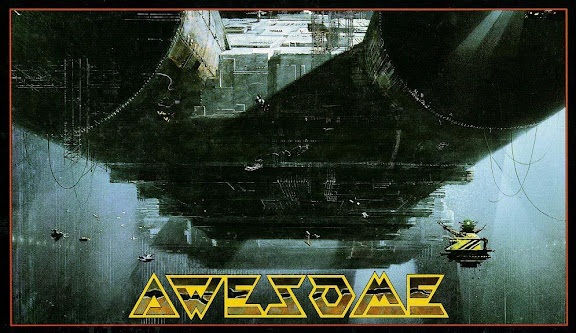
Cormac Batstone remains the best developer name I ever heard of.
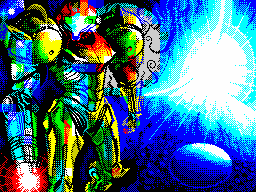
Metroid ZX! 🙂
I took your purse and felt a connection – m4w
Date: 2009-05-14, 3:06AM EDTTuesday night around 11:30. On 53rd btw 1st and 2nd. You came out of the subway and I followed you. You looked over your shoulder, saw me and started walking faster. I ran up, grabbed your arm, took your purse and ran away. I heard you yelling for help but let’s be honest, this is New York. The only way people would come running is if you yelled “Free Weed!”
I’ve done many a snatch-and-grab but no one has ever stuck in my mind like you. There was a quick moment when our eyes met that I felt something strong. I think you felt it too. If I wasn’t so shy (or so committing a crime) I would have asked your name. I, of course, later got your name from your drivers license. So Jennifer if you’d like to get together for a drink sometime get back to me.
Oh, and I can give you back your purse. Your credit cards are still there but I spent the cash (sorry). And my room mate took your tampons. I don’t know what he does with them but he always takes the tampons. If it works out between us I’ll totally buy you some new ones 😉
- it’s NOT ok to contact this poster with services or other commercial interests
Seriously, this is movie-pitch material if I ever saw it. The built-in Seth Rogen room-mate character looks like it’ll practically script itself!
Oh happy day!
I’d practically forgotten that the sublime Jeff Minter and his Llamasoft troops had been toiling away at what was once called Gridrunner+++. Gridrunner Revolution appears to be done and heading out to reviewers. I’m expecting the same reception that Space Giraffe got – those that refuse to take the time to learn how to play a game that does things its own way will hate it whilst those of a more open minded and receptive nature will find merit in its approach to the time-tested delights of blowing up bunches of spangly pixels into much smaller groups of spangly pixels. Based on people’s levels of anticipation for Modern Warfare 2 I can’t really see anyone justifying a complaint of “oh, haven’t we done enough of that sort of thing by now?” with much credibility.
Without further ado, let’s have a shufty at some extended gameplay. First, the easy grade:
And now for the higher difficulty grade:
Now, by this point you’re either intrigued or disgusted. There’s a few things worth noting. Firstly, if you’ve watched those videos with the sound off, you’re missing half the game. Audio, besides from being characteristically idiosyncratic is crucial signposting in these games. Half the joy of Space Giraffe and Gridrunner++ was becoming fluent in the game’s audio language. This is what the “Wahh, my eyes!!” brigade couldn’t bring themselves to understand. Or perhaps they could, but it was simply more fun to cry on the internet than dare to go against the flow of the almighty Popular Opinion.
What else? Well, there’s going to be little treasures throughout this chappy. If the names for the different difficulty grades, the “ALERT!” sound effect and the sprite for the player’s satellite didn’t show you that this game has some appealing cheek then you’re just an old fuddy-duddy.
Watching the first video it seems that the game makes more of a concerted effort to spell things out to the player. I’m not sure how I feel about that really. Whilst I believe Space Giraffe‘s tutorial could have been clearer, I loved working out the nuances of the game, the enemy types and effective strategies for progression and scoring. This looks like a step too far in the opposite direction with, I fear, little left for the player to discover for themselves. I don’t blame Minter for this, I blame a culture that’s so A.D.D. afflicted that they resent having to read anything and hold a personal vendetta against developers who don’t spoon-feed them information and congratulatory rewards for being spoiled, stroppy brats.
Space Giraffe was originally a 360 exclusive. Which goes to show you what happens when you got about presenting a non-conformist game to an audience bred on a totally conformist diet of digital drudge. For the most part, an audience with such a narrow view simply couldn’t think in unconventional terms and were offended that they should be expected to and were equally offended by anyone in their ranks who managed such an incomprehensible feat. Then they went back to doing headshots and teabagging space marines. You know, real gaming.
Sweeping generalisations? Absolutely – but given the outpouring of slanderous venom that was issued from the community at large I’d say it’s well deserved.
Minter’s excessive tool-tips aside, this looks to be another brilliantly realised title from a master of his trade.
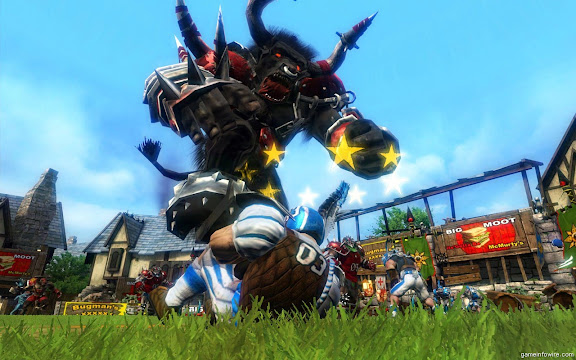
Ref! Foul! REF! Aw, c’mon!!
Finally! :
 The sheer inanity of melodrama the game culture applies to things never ceases to amaze and irk me. Take, for example, the Sega Dreamcast.
A console that was launched ten years ago to this day and failed to achieve significant market penetration to such a degree that it was discontinued by its manufacturers only a couple of years later (in North America).
Yet, like the Norwegian Blue, many refuse to regard it as an entity that has shuffled off its mortal coil and insist on celebrating its birthday as though it still has a presence in the current marketplace. There is, of course, an inconsistency here because if such practice were to be regarded as remotely normal then every console that was ever made would be given annual recognition regardless of whether its manufacturers buried it or not.
Given the current climate in today’s gaming culture, its fondness for urban myth and melodrama and its selective amnesia, many are fond of ‘blaming’ the death of the console on the PlayStation 2. Suggesting that some sort of console-cide has occurred and, far worse, gone unpunished.
Besides EA’s notable lack of interest in the platform, the more likely culprit to the machine’s death in the marketplace (other than there being a host of more capable, more aggressively marketed products out there) was the crippling piracy issue it suffered from. Whilst piracy afflicts many consoles there is still a barrier to entry – that of needing to modify the console in some way in order to allow unsigned executables to run. The was overcome on the Dreamcast and it was possible to obtain pirate software that would run on unmodified machines. Anyone who knew how to write data to a CD could now get free Dreamcast games. GAME OVER.
With that in mind, it’s interesting to note that software exploits exist on the original Xbox and also on the Nintendo Wii that allow them to be ‘soft modded’ – effectively unlocked to run unlicenced software including pirated games. Microsoft dropped the Xbox like a brick the instant they launched the 360 and, given what happened following the piracy on the Dreamcast, it’s easy to understand some of their motivation. These days, new firmware (the operating system for a console) is distributed online and on game discs. This can often overwrite unlocked systems or render them completely useless – leaving the console owner with a lump of useless silicon.
Hindsight, being the bitch that it is, shows us that just because you seem to be on the up at the start of something doesn’t mean your position is secure by any stretch of the imagination. It’s a lesson many would do well to remember.
I had a Dreamcast, I enjoyed it up to the point where it became fond of suddenly resetting itself after 30 minutes of gaming (apparently quite a common complaint). Its online was vastly overhyped (“6 Billion players”) and under-delivered – however much credit Peter Moore attempts to retroactively claim for it. I’ve nothing against the machine or Sega. In fact, I think Sega were very smart in going down the software-publisher route. Instead of competing with Sony, Microsoft and Nintendo they were able to profit from them and they showed chutzpah by putting franchise titles like Jet Set Radio Future, Outrun and Panzer Dragoon on Xbox whilst giving PS2 the underrated Shinobi update along with Rez and Space Channel 5. In the meantime Gamecube got Ikaruga, a regionally crippled Phantasy Star Online and.. er.. Billy Hatcher.
Is this a hate piece? Not at all. It’s a rational piece. One that’s free of emotion or melodrama. If any of this candid perspective is ruffling your feathers then ask yourself how absurd it is to have some sort of emotional connection to a collection of circuits and silicon.
Get over it. It’s dead.