A decade decayed
Whilst reports of my death may not have been exaggerated, I do concede that koffdrop.com has largely been in a state of suspended animation for 10 years. 10 years to the day, in fact.
The last decade has been eventful – both for me personally and, it seems, in countless areas of the world, videogames, culture and technology. So, let’s catch up on some of the key milestones. What fun!
The Internet
My casual disinterest in social media platforms has transformed to a commitment of non-engagement.
I flirted briefly with Twitter some years ago under the handle of @HideousKojima (a name conjured up by my phone’s over-zealous auto-correct). My intent was to follow certain people and to contribute a “!” to express Metal Gear-themed alarm now and again. I did that for a bit, but found the algorithm pushing undesirable content my way, urging me to follow certain people, waving ‘current interest’ stories it felt I should know about. As limited and disciplined as my engagement was, I quickly found myself returning to see what was new at multiple points in the day. A platform with so much traffic and, in particular, so many spectacular traffic-accidents, the compulsion to repeatedly gawp at the carnage was difficult to resist.
Whilst I enjoy witnessing Darwin Award behaviour and schadenfreude as much as the next person, I didn’t want an incessant feed of it, or to grow hooked on it. So I uninstalled.
Since then I have felt no compulsion to re-evaluate my disdain for social media or its influence. Watching documentaries like The Social Dilemma further cement my current views.
Gaming forums have certainly transformed in the last decade. Even those that proclaim old-school sensibilities, or those that declare themselves to be committed to non-partisanship quickly stumble and fail basic sniff-tests when such claims are put to the test.
In my time – as some former readers of this site may recall – I helped set up one such gaming forum. Over time I frequently found myself dog-piled when I habitually persisted my practice of expressing opinions that, whilst informed, ran contrary to those of the group. However, once off-topic conversations started veering into legitimising violence I opted to leave and made it clear why.
I’ve witnessed a continual shift towards forms of radicalisation, ‘us-or-them’ tribalism and a pushing of dogma (be it games-topics or others) that tell me it’s time to log-out and walk away.
To that end my engagement with the internet has become increasingly ‘read only’. It seems to work well for me.
It’s a good job there’s lots to see and do on the Internet, then. Stuff that doesn’t require engagement.
YouTube content often tickles me. I particularly enjoy content that confirms my biases, features cats, compiles memes, or covers quirky topics about games. Anything that combines two of more from that list is a prime candidate to add to my list of favourites.
I still make use of RSS feeds and favour the free version of the Inoreader site/app as my way to consume all that lovely content.
For real-world and current affairs topics I visit NewsNow regularly. The site collates headlines from multiple news sources for each topic that it offers. I find this is useful to mitigate echo-chamber practices that may occur when using a single source.
Entertainment
Entertainment, for me, has mostly meant playing games, watching TV and movies and arguing with people on the internet.
I used to be an avid cinema-goer, seeing new releases each week and paying extortionate prices for popped corn. Having become rather fed up with the lowering standards of that experience, I now favour the home-cinema approach. My best friend introduced me to Plex and I’ve never looked back. Whilst I may now have to wait a couple of months for a spanking new release to become available digitally, the benefits of this ‘DIY Netflix’ approach are so good – and my backlog so great – that this delay is inconsequential. It also means I am not paying for monthly subscriptions to streaming services, so works out to be cost-effective too.
This is not to say money hasn’t been spent. I host all of my own media content and multi-terabyte drives and drive enclosures are not exactly cheap. But I feel its an economy that suits my preferences better than a monthly cost.
Broadcast / terrestrial TV holds absolutely not interest to me any more. When I might glance at a listings guide, or have done some idle channel-surfing I find it all seems terribly insipid. My wife is more forgiving than I am and enjoys nature programs and some other items. Even so, it makes more sense to us to view them on a catch-up service like BBC iPlayer than attempt to fit our lives around a broadcaster’s schedule.
Instead we tend to watch a season of a particular drama via Plex. Or, increasingly frequently, surf YouTube the way one might have surfed satellite channels.
Videogames
I still adore videogames.
I have never regretted leaving the videogame industry when I did. I learned that I was unable to simply play a game without finding myself analysing it on a variety of levels. Becoming a mere consumer again allows me to enjoy them on the more superficial level they are meant to be enjoyed.
I realise this compromised-enjoyment issue must be true of anyone that has a passion as their profession. If you are an author you may not be able to simply read a book like a regular person does. If you write music, you may not be able to listen to music simply for its pleasure.
There is much truth to the phrase “Be careful what you wish for” when those that enjoy something wish they could do it as a career.
The industry also appears to have changed – being rampantly infested with ideology that brings nothing of value to the product or experience. I am not so backward or narcissistic that I need to see myself represented in my escapism. The off-screen sex-lives of NPCs whose only purpose for existence is to remind me they are in a same-sex relationship with another NPC is spectacularly unimportant to me. I would be more interested to know if they are right-handed or left-handed.
The games media has shown that I wholly underestimated them in previous rantings – and somehow managed to get even worse.
Games, for the most part, just keep getting better and better. The embarrassment of riches in this hobby is, well, embarrassing. I never forget that it’s up to me whether I buy a game or not – and if I don’t like a game for any reason then I’m not obligated to spend my money on it.
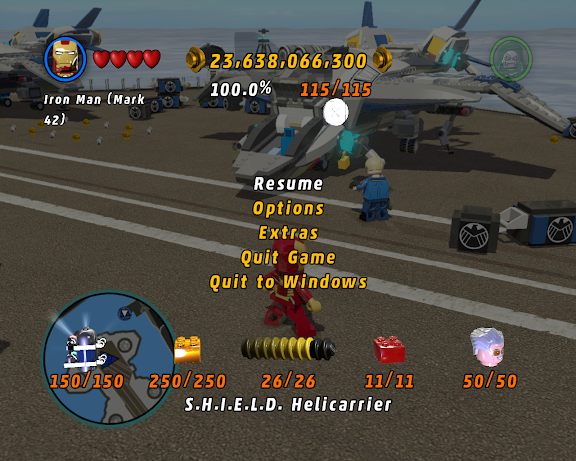
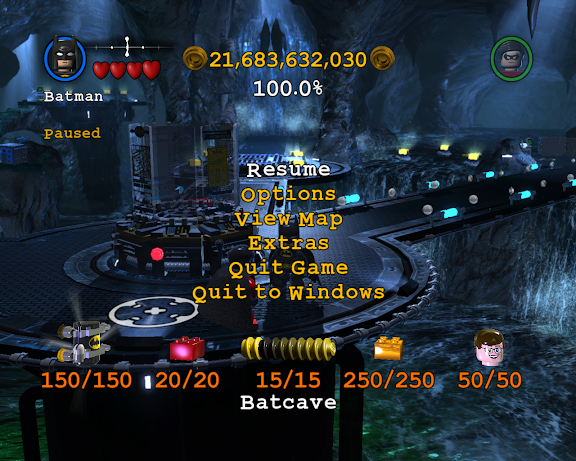
Should I feel the urge, I may dedicate a future koffdrop.com post to some of my gaming highlights from the last decade. Yes, I still play Lego games to 100%. Yes, I still play God of War games. I’ve had enormous fun being introduced to automation/factory games courtesy of Shapez.io and Autonauts.
The outstanding Hades had to be uninstalled because it’s dangerously convenient 30-min playtime was preventing me from dipping into any other game. And I’ve spent literally multiple hundreds of hours in the Xenoblade Chronicles games across Wii, Gamecube and Switch.
My perceived hate-boner for all things Nintendo meant that I didn’t enjoy a single second of the hundred+ hours I spent on Zelda: Breath of the Wild, nor its sequel that is waiting for me to start it.
Soon.
Given that I love playing videogames I did wonder how much of my time I invested in playing them. At times it has felt this was eclipsed by talking about games, arguing about games, witnessing others talking / arguing about games, watching others play games – either to enjoy a comprehensive walkthrough or to admire the skill of someone speedrunning a game. All these gaming-related distractions eating into my precious games-playing time.
Out of curiosity I decided to track how much time I spent playing videogames. I had intended for this to be a little fuzzy – simply noting my start and end time for a gaming session and then adding it up in a spreadsheet.
I was recommended Clockify, a time-tracking application. It is clearly intended for use in more professional environments but turned out to be fantastic for this exercise. Now I could easily compartmentalise time across games and platforms and get automated charts and stats provided for me.
After a couple of calendar years – the latter reporting a total of over 1,250 hours spent gaming – I felt my curiosity had been appropriately satisfied and have since stopped tracking my time.
Is 1,250+ hours too much time spent gaming? Not enough? It’s none of your fucking business.
Work
Sadly, it is not yet time for me to retire so until I become independently wealthy I need to be employed and earn money.
At the time of writing I’m in the 4th year of my current position and consider myself very fortunate that I am surrounded by great people who are dedicated, talented and more than agreeable. The company leaders are also a pleasure to be with and take great care to find the right people when recruiting. That many of the staff have tenures approaching a decade or more is testament to all this.
The work is largely internet-based which meant that when the topic of COVID lockdowns and working-from-home came about, we were able to adapt very swiftly and with negligible compromise.
As such, whilst I can typically find something to complain about on any given subject, when it comes to my current work-life I can only count my blessings and appreciate what I have and thank those that make it possible.
I also feel fortunate for having achieved my ambition of working in the games industry.
Increasingly I feel fortunate for leaving it when I did. Before the advent of pressure groups, social-media death-threats, and movements and campaigns that make a lot of noise yet provide not a single speck of quantifiable merit to anything.
Life
“Marriage. It’s not a word, it’s a sentence.”
Whilst I appreciate the truth of commitment in that statement, my personal experience is that it is far from a life of suffering and penance. In my case it’s the best thing I’ve ever done and meeting my wife is the best thing that’s ever happened to me. I wish for everyone to have the good fortune I’ve had. But hands off – she’s my wife, get your own!
And if there’s been trials and tribulations to deal with, they have been challenges that have been met together – never left to one or the other, or caused by one or the other.
And life has certainly thrown a number of curveballs. Whether it’s enduring COVID together, one or the other of us going into hospital or unavoidable family drama – we have successfully come out the other side richer for the experience and appreciative of the partnership we enjoy.
On matters of health we’re both still here. Getting older one day at a time. I’ve embraced the increasingly pervasive amount of white in my whiskers. I’ve never been a practitioner of good health and I can only blame myself when I wake up in the morning, move into a vertical position and feel a new ache or discomfort that I swear wasn’t there the day before.
I’ve long been a sufferer of gout – the crystallisation of uric acid in the blood. The popular notion of it being some ‘old man’ ailment should be dispelled, as I acquired the condition in my 30s. I remain convinced that this was life providing me with a lesson in karma as, shortly before I was diagnosed with it, I had been mocking a close friend suffering from it. We at least became closer thanks to gout. Overall, I wouldn’t recommend it. It’s seriously not fun when it flares up.
I’ve also had minor surgery recently to address some lazy veins in my leg that seem to be indifferent to pumping blood back up to the heart. It wasn’t a big deal, but the support stockings I had to wear for a few weeks were very unattractive – that shade of green is so not my style.
Getting a bout of COVID sucked. Fortunately my suffering was shared with my wife and we mooched around, zombie-like, for a week or so. Afterwards it was interesting to learn that we’d both felt so exceptionally ill that we’d had quite similar morbid thoughts, doubting a recovery at all.
This year marks my half-century. Do I feel grown-up and mature? Sometimes. But that perspective of adults seeming to be so assured, having robust plans, knowing what to do etc. that I had as a child has turned into the realisation that most of us are winging it. Just wanting to get through each day with as little drama as possible.
Turning 50, one of my revelations is that I can say “I remember when..” with far more integrity. The world has changed since I was a lad. We only need to see what videogames were like back then to what we have today. Or that we’ve seen breakthroughs in technology become standard and then obsolete. Compact Disc, anyone?
These are far from the only epoch-level changes I could remark upon, but I’ve also learned a few lessons about diplomacy and discretion in the last 50 years.
Wisdom
I am not wise.
But, by and large, I am happy and content.
In bringing this lengthy post to its conclusion I thought I’d wrap up with one or two of the things I believe have meaning and value.
Learn to laugh at yourself. The most tiresome, inflexible and downright boring people I’ve encountered in life are almost always the ones that take themselves incredibly seriously. I’m not suggesting that people must always be trying to undermine themselves, or go out of their way to act in some infantile way. But if you can’t laugh at yourself then the only people that do will be other people.
Count your blessings. It’s human nature to be acutely aware of what we yearn for, or when we feel we’ve been wronged. These shouldn’t necessarily be dismissed outright. But I do feel it’s worthwhile to get some balance and take a moment, now and again, to take stock of the things that you do have. Good health. Supportive family. A fancy schmancy GPU. Knowing you have food to eat for your next meal and so on. It doesn’t have to be a sexy list, but some of those things we take for granted would drastically impact on us if we lost them.
Pick your battles. Fighting takes effort and I’m a lazy person. I don’t think I can challenge every perceived injustice that’s been committed against me. And if I did, what would I gain? Would it be worth that effort? What could I be doing in that time instead? (playing videogames, duh!)
Talk is cheap. I love to complain. We all do at times. “My work sucks” and so on. Talking is easy. What’s hard is to act. To do something to address those things we complain about. OK, so work sucks. Then why not change your job? I’ve learned that when people genuinely care about a grievance they keep raising they will turn words into meaningful action. Not action that expects other people to make changes – but action they enact themselves. Lots of people claim to want change – but very few are prepared to change.
And, for today, this is where I leave you. Thank you for making it this far – and for any support or feedback you’ve given me. Perhaps I’ll get back into the habit of posting a little more frequently.. ..but then, I do have a new Zelda game that I should get around to starting..